Medical Cannabis and Driving in the UK 2026: The Complete Legal Guide
Can you drive with a medical cannabis prescription in the UK? This guide covers the law, roadside drug testing, THC blood limits, how long cannabis stays in your system, and how to stay legal while taking your prescription.
Written and fact-checked by
Dave Mak· Founder & Editor
Dave has researched and written about the UK medical cannabis sector since 2024, focussing on clinic pricing transparency, CQC registration standards, and patient access schemes. All clinic reviews on this site are based on published pricing, verified Trustpilot data, and CQC records.
Reviewed and updated 21 June 2026
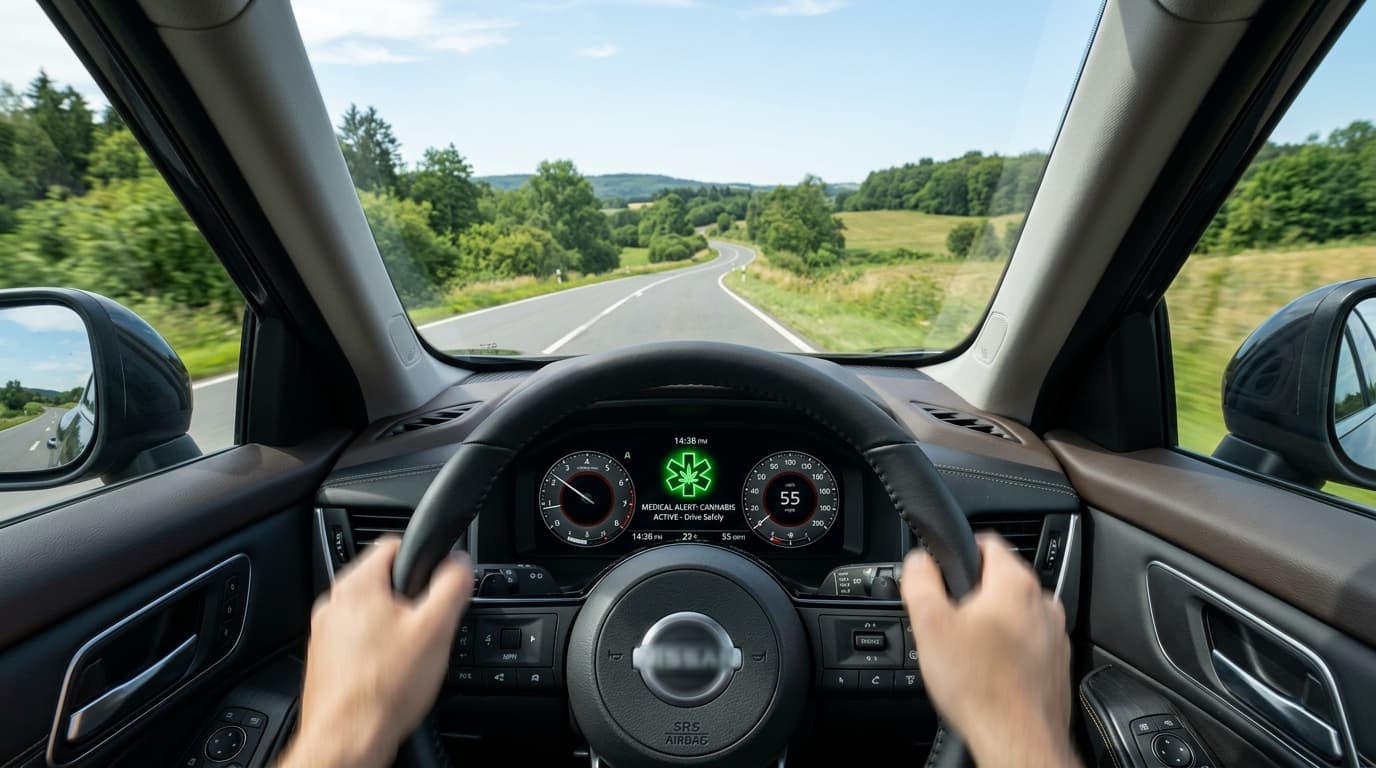
Medical cannabis patients in the UK are subject to the same road traffic laws as any other driver. This creates significant practical challenges because THC — the psychoactive component in cannabis — can be detected in blood for days after use, even when the patient is no longer impaired.
This guide covers the current law, how drug driving enforcement works, what the limits mean for patients, and how to stay safe and legal.
The Law on Drug Driving in the UK
It is an offence to drive with certain drugs in your blood above specified limits. This applies to both illegal drug use and legally prescribed medications if they impair your ability to drive.
The Road Traffic Act 1988 (as amended by the Crime and Courts Act 2014) sets specific limits for certain controlled drugs. For cannabis, the limit is:
2 micrograms of THC per litre of blood (2μg/L)
This is an extremely low threshold. Medical cannabis patients prescribed THC-containing products may exceed this limit for several days after their last dose, even if they feel completely sober.
The law also includes an impairment-based offence. Even if your THC level is below the limit, you can still be prosecuted if a police officer believes your driving was impaired by drugs. This is a more subjective test, but it means patients should not assume that being below the legal limit means it is safe to drive.
How Drug Driving Enforcement Works
Police in the UK use two types of tests for drug driving:
- Roadside screening: Police can require you to provide a saliva sample at the roadside using a DrugWipe test. This screens for the presence of cannabis (THC), cocaine, opiates, and amphetamines. A positive screen is a preliminary test and does not automatically mean a conviction.
- Station blood test: If the roadside test is positive, or if the officer has reasonable grounds to believe you are impaired, you will be arrested and a blood sample will be taken at a police station. This is the definitive test used as evidence in court.
The blood test measures the exact concentration of THC in your blood. If it is above 2μg/L, you are guilty of an offence unless you can prove a valid medical defence.
The Legal Defence for Medical Cannabis Patients
The law provides a specific statutory medical defence for patients who have been prescribed a controlled drug. This means:
- You have a valid private or NHS medical cannabis prescription.
- You took the product exactly as prescribed by your doctor.
- You were not impaired at the time of driving.
If you meet all three criteria, you have a complete defence to a drug driving charge under Section 5A.
[!IMPORTANT] The defence only applies if you took the cannabis exactly as prescribed. If you took more than your prescribed dose, or used cannabis that was not prescribed to you (e.g., from the illicit market), the defence does not apply.
How Long Does THC Stay in Your Blood?
THC is fat-soluble, meaning it accumulates in body fat and is released slowly into the bloodstream over time.
- Occasional Use: For a single occasional dose, THC may be detectable for 24–72 hours.
- Regular Use (Daily): THC can accumulate and be detectable for 7–14 days after last use.
- Heavy Long-term Use: Detection windows can extend up to 30 days.
This means that a patient who takes medical cannabis every day may never be completely free of THC in their bloodstream. If involved in an accident or stopped by police, they will likely test positive even if they haven't used cannabis for days and feel completely sober.
The Cannabis Industry Council's Guidance
The Cannabis Industry Council (CIC) recommends the following best practices for patients:
- Do not drive if you feel impaired in any way.
- Understand your medication and how it affects you before operating a vehicle.
- Leave adequate time between taking your medication and driving (e.g., overnight).
- Carry your documentation (prescription copy, clinic letter, photo ID) with you in the car at all times.
- Inform your insurer that you have a medical cannabis prescription to ensure your policy remains valid.
Medical Cannabis and Work-Related Driving
If you drive for work (as a lorry, bus, taxi, or delivery driver), your employer may have strict drug policies that override standard legal defences. The DVLA guidelines for professional drivers are particularly strict.
If you hold a HGV, PSV, or taxi licence and are prescribed medical cannabis, you must:
- Check your employer's drug policy.
- Speak to your occupational health department.
- Inform the DVLA if your medical condition itself affects your ability to drive.
- Assess whether you can safely perform driving duties while taking your medication.
What Should Patients Do? (Safe Driving Checklist)
- Never drive if you feel impaired, fatigued, or somnolent.
- Keep your documents close: Keep your original medication container with the pharmacy label on it and a copy of your clinic letter in your glove box.
- Consult your doctor: Always discuss driving openly with your prescribing specialist.
Looking for specific strains in Amsterdam?
Don't leave your medical routine to chance. Damlive tracks live coffeeshop menus across Amsterdam so you can find exactly what you need before you arrive.
Medical Disclaimer
This content is for informational purposes only and does not constitute medical advice. Cannabis-based medicines are prescription-only in the UK and must be prescribed by a specialist doctor. Always consult a qualified healthcare professional before starting, changing, or stopping any treatment. Clinic prices and policies change frequently — verify current details directly with the clinic. The GreenPrescription may earn a commission from some clinics listed.
Related Reading
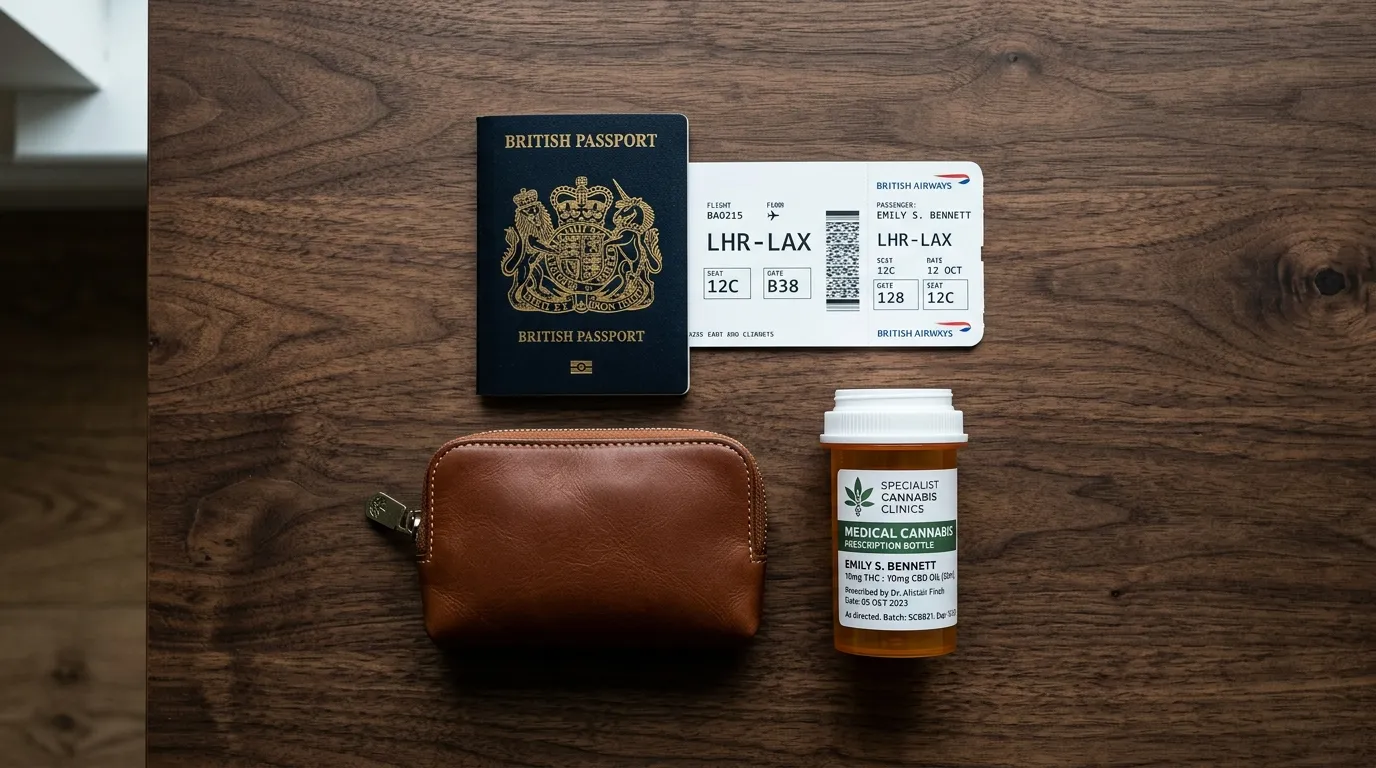
Flying to Amsterdam with a UK Medical Cannabis Prescription
A complete 2026 guide to taking your NHS or private medical cannabis prescription through UK airport security and into the Netherlands legally.
Best Medical Cannabis Clinics UK 2026: Full Comparison — Prices, Ratings & Reviews
Compare all UK medical cannabis clinics by price, Trustpilot rating, and patient reviews. See how Releaf, Mamedica, Alternaleaf, CB1 Medical, Integro, and 25+ other clinics rank in 2026. Find the best clinic for your condition and budget.

The Complete Guide to Medical Cannabis in the UK 2026: How to Get a Prescription
Medical cannabis has been legal in the UK since November 2018, yet most Brits don't know how to access it. This guide covers everything: qualifying conditions, how to find a clinic, what to expect from consultations, costs, and how to get your first prescription.